
How West Jordan Residents Are Found
A useful West Jordan residents directory is assembled from records that answer different questions. The Salt Lake County Assessor can connect a name, address, or parcel to an owner of record. Utah voter data can show a public-category voter and the address attached to that registration. Deeds, court summaries, cemetery registers, and older directories add dates and roles. Start with the detail already in hand, then choose the office that keeps the matching record.
For a current address, begin with the assessor and map the parcel before treating any name as a lead. For one person, compare the person’s role in several records. For family history, move to the regional Polk volumes, census schedules, County Archives, and cemetery material. None of these records is a complete list of everyone in a household. An owner may live elsewhere, a voter may be protected, and a directory entry is only a dated snapshot.
- Search the Salt Lake County Assessor Parcel Search by owner, address, or parcel number, and save the parcel ID and situs address.
- Compare the parcel with the Salt Lake County Parcel Viewer and note nearby parcels, ZIP, districts, and boundary layers.
- Use Vote.Utah.gov for a voter’s own status or follow the separate public-data route for a lawful list request.
- Check Utah Courts Xchange when a court party, case date, or disposition can confirm identity.
- For an older household, search the Polk books, County Archives, FamilySearch, and Utah State Archives; request a record from the actual custodian when the web route ends.
West Jordan Resident Records Offices
West Jordan records sit at three levels. The city Recorder keeps municipal documents and routes city GRAMA requests. Salt Lake County holds parcel, tax, and recorded-land material. The county clerk and Utah state agencies control election, court, vital, licensing, and custody records. That split matters: a city request cannot produce the county deed index, and a county assessor search cannot certify a birth record.
The West Jordan City Recorder is at 8000 South Redwood Road, West Jordan, UT 84088, 801-569-5116, Monday through Friday, 8 a.m. to 5 p.m. Salt Lake County’s Assessor is at 2001 S State St, Salt Lake City, UT 84114-7421, 385-468-8000, Monday through Friday, 8 a.m. to 5 p.m. A county election list comes from the Salt Lake County Clerk Election Division, while statewide voter data is ordered through Vote.Utah.gov.
Salt Lake County Recorder / Register of Deeds
8000 S Redwood Rd
West Jordan, UT 84088
801-569-5116
Salt Lake County Clerk Elections
Salt Lake County Clerk
Salt Lake City, UT
Contact through clerk
West Jordan Parcel Search Fields
The assessor is the cleanest first stop when an address or owner name is known. The current form uses “Last Name, First Name” for an owner, an address selected from a county-populated list, or a parcel number shown in the 00-00-000-000-0000 pattern. The legacy form adds frontage number, direction, street name or number, and type or direction. Begin with at least three owner-name letters or a street clue, then save the exact result rather than relying on a screen memory.
| Field | How West Jordan searches use it |
|---|---|
| Owner | At least three letters; use last name, comma, first name when both are known. |
| Address | Type a partial address, then choose the county autocomplete result. |
| Parcel number | Use the current 16-character display or the legacy ten-digit parcel core. |
| Frontage and street | Legacy fields support a street sweep and return like values. |
| Block prefix | The first seven parcel digits can search every parcel in an area, section, and block. |
The result identifies an assessed parcel and an owner-of-record relationship. It does not prove who sleeps there. Keep that distinction in every West Jordan residents directory search.
Utah Voter Records and Privacy
Utah voter records have a public and at-risk split. For public-category voters, the statewide file can include legal name, age range or year of birth, physical and mailing address, precinct, districts, party status, active or inactive status, last update date, and vote history. Full date of birth, license or ID number, Social Security number, email, phone, and signature are protected. The state’s individual status tool is meant for a voter checking their own registration.
A bulk statewide file is a separate purchase, listed at $1,050 for a tab-delimited download, with county or district lists requested from the appropriate clerk. Victims or potential victims of domestic or dating violence, law-enforcement officers, protection-order subjects, armed-forces members, public figures, and people living with them may have identifying information withheld or anonymized. A missing voter result can reflect protection, nonregistration, or a record outside the requested date.
Note: A public voter entry can support an identity check, but it is not a complete West Jordan household roll.
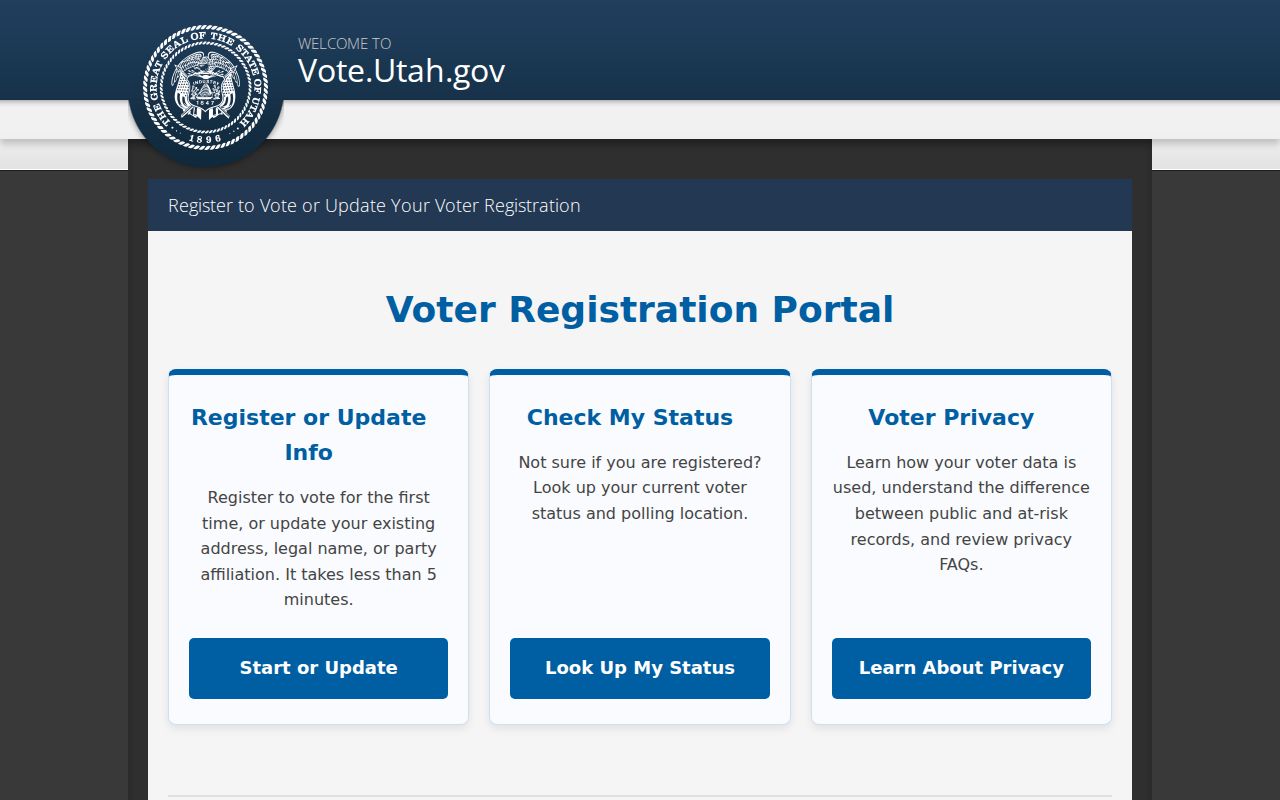
The Utah registration and status portal shows the official route and its privacy explanation.
West Jordan Recorder Alerts and Deeds
Salt Lake County Recorder Data Services lists owner of record, parcel history, recorded documents, tract index, chain of title, subdivision maps, and plats. The public search requires terms acceptance and an address or parcel chosen from an autocomplete list. Occasional users can buy a $5, 24-hour access option, while other data packages and copies use the county’s paid system. The public pages do not state one online start year, so an older deed may require the counter, archival books, or FamilySearch material.
The free Property Watch service sends email or text alerts for new parcel-attached documents and identifies the parcel number, entry number, document type, and recording date. It is useful for watching a parcel, not for reconstructing every deed. The Recorder warns that some documents may not attach to a property and that its data is not a title opinion. A person following a West Jordan address should preserve the grantor, grantee, legal description, and recording date before moving backward.
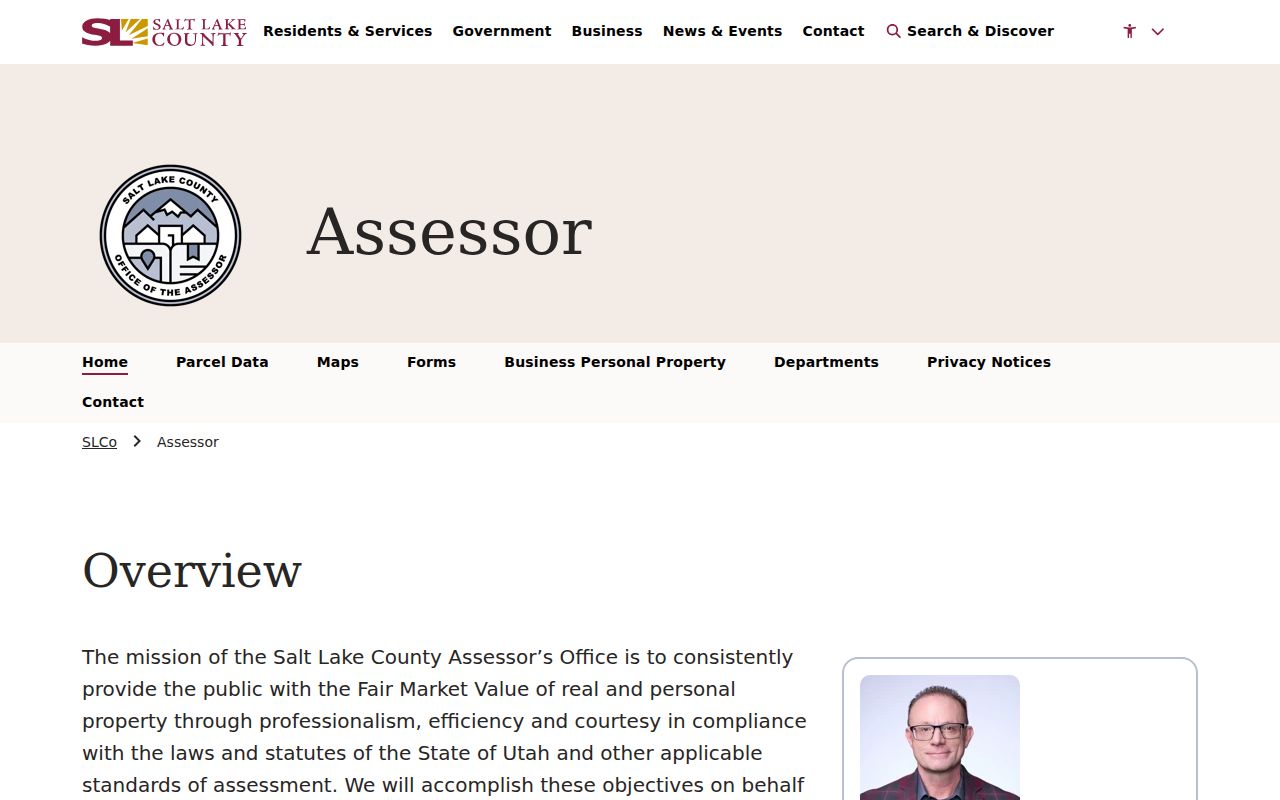
The Salt Lake County Assessor page provides the county’s owner, address, and parcel search route.
West Jordan Courts and Vital Records
Utah Courts Xchange covers West Jordan Justice Court and West Jordan District Court through CORIS. A result can show a case number, court location, case type, party name and code, filing date, hearings, judgments, disposition, and public documents. Searches are billable, results cap at 500, and public electronic documents cost $1 each. The guest route lists a $10 one-time account option and $0.20 searches. Sealed, expunged, juvenile, adoption, and other restricted matters do not appear.
Utah’s Office of Vital Records and Statistics holds births and deaths from 1905 forward. Birth certificates are private for 100 years, death certificates for 50 years, and other vital records generally for 75 years under Utah Code 26B-8-125. Marriage and divorce requests on the current form cover 1978 to 2010, with limited marriage records from 2011 forward. These rules make a restricted certificate a poor shortcut for a current residents directory.
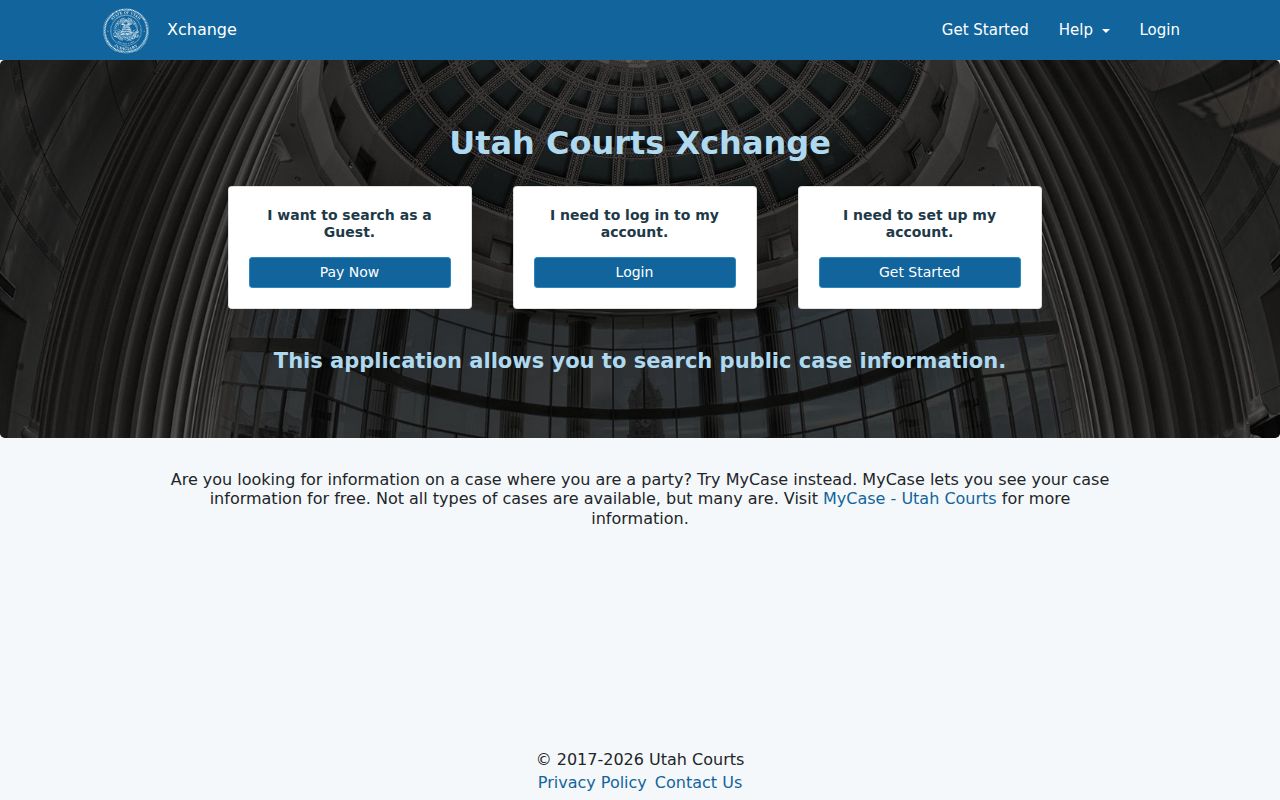
The Xchange guest search is the official starting point for public Utah case summaries.
West Jordan Birth-Family Records
The official Utah Adoption Registry is the lawful route for a Utah-born adult adoptee, birth parent, or eligible blood-related sibling seeking mutual contact. Adult adoptees born in Utah may access a non-certified original birth record under the post-November 1, 2025 change, but contact information still depends on consent. Registration is $25, an update that requires a new search can be $10, processing may take eight weeks or more, and identity verification is required.
The registry is not a public index of birth-family addresses. Its forms allow do-not-share or share-contact choices, intermediary contact, and non-identifying health or social history. That narrow purpose is important when a family search reaches a protected record. Use OVRS for eligible certificates and the Adoption Registry for the mutual-consent pathway.
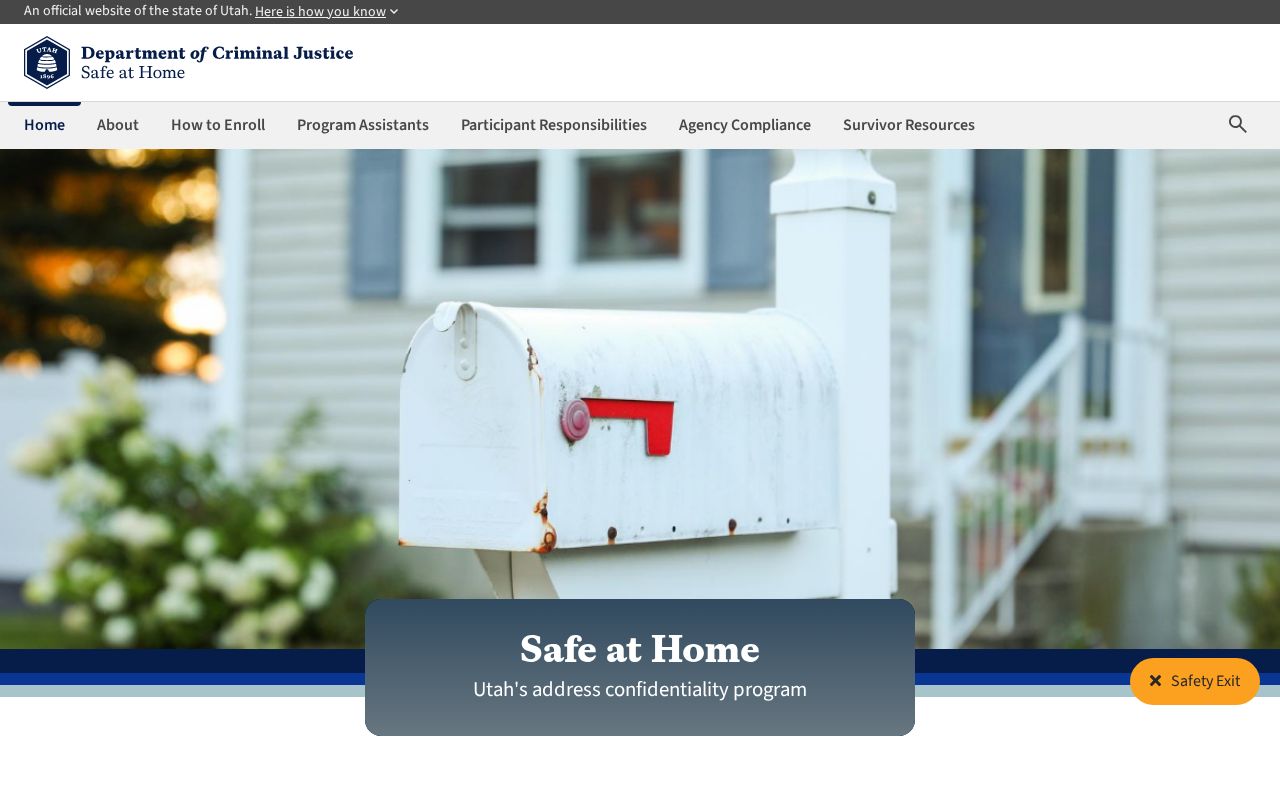
Utah Safe at Home explains the address-confidentiality program for eligible participants.
When West Jordan Records Need GRAMA
Utah’s Government Records Access and Management Act, or GRAMA, is the fallback when a public record is not exposed in a search form. A request must be written to the entity that maintains the record. Include the requester’s name and address, a phone number if available, a specific description, a date range, the address or parcel, and the preferred inspection or copy method. Inspection is free. Copies or staff work can carry reasonable actual-cost fees, and a written response generally has a ten-business-day window, or five business days for a qualifying expedited request.
For West Jordan, send a municipal request to the City Recorder or the police records route named by the city. For parcels and recorded land, name Salt Lake County as custodian. The statewide Open Records Portal is a submission convenience, not a replacement for identifying the actual office. Ask for existing records, not an explanation or a new report. Redaction of private, protected, or controlled information is part of the process.
The Utah GRAMA FAQ describes request contents, response timing, and actual-cost rules.
Current West Jordan Resident Directories
Current West Jordan resident directories are really a set of role-based records. The assessor names an owner of record. The voter file identifies a registered voter when the record is public. A deed names parties to an instrument. A city license names a business role, and a court case names a party to a proceeding. Reading the role first prevents a parcel owner, a voter, an applicant, and a household member from being treated as the same thing.
| Source | Who It Lists | Keeper | Access |
|---|---|---|---|
| Assessor parcel | Owners of record and parcel links | Salt Lake County Assessor | Free web search |
| Voter data | Public-category voters and address fields | County Clerk / Utah | Status or paid data route |
| Recorder index | Grantors, grantees, instruments, dates | Salt Lake County Recorder | Public search and paid services |
| City records | Public civic actions, permits, licenses | West Jordan Recorder | Portal or GRAMA request |
| Historical directories | Dated names, addresses, occupations | Historical Society / FamilySearch | Online, shelf, or ILL |
Use the property roll for a parcel question, the court index for a case question, and the library or archives for an earlier address. The West Jordan resident lookup workflow is the better fit when one name needs confirmation across several roles. Business and professional searches can add a public principal or license record, but a business address is not a private home address.
Historical West Jordan Resident Directories
The strongest historical West Jordan residents directory source is regional. R.L. Polk directories for Salt Lake City and vicinity appear in verified bibliographies from 1910 to 1989, with a specific regional run from 1950 to 1990. The digitized 1958 Polk suburban Salt Lake County volume is 1,166 pages and explicitly names West Jordan along with other valley communities. The Utah Historical Society also maintains a searchable Utah City Directories collection, while FamilySearch indexes U.S. city and business directories by name, occupation, and address.
After 1924, Utah Historical Society staff describe “pink pages” that turn a known address into an occupant search. Before that date, newspapers, county records, and archival sources may be needed. A volume can omit a person because its coverage was regional, the address was new, the spelling differs, or the household was not listed. The full West Jordan city directory treatment explains how to read and compare these dated snapshots.
The West Jordan Library branch listing confirms the local library channel for catalog and reference help.
West Jordan Cemetery Clues
The West Jordan Cemetery archive is a useful endpoint when a name trail reaches a death or burial. Utah State Archives Series 84636 is public and covers the sexton interment register from 1885 through 1981. The original register may include grave location, death-certificate number, name, age, cause and place of death, burial date, lot owner, and parents’ names and nationalities. Financial and plot-owner records cover 1963 through 1981. A first notation mentions a person buried at sea in 1852, but actual interment records begin in 1885.
Use the city’s Burial Site Search for a current route, then check the archival finding aid when an older entry is needed. Confirm whether the burial is in West Jordan City Cemetery or the Wight’s Fort site before treating a missing result as proof of absence. Cemetery evidence identifies a burial and family clue. It does not establish a living person’s current address.
The Salt Lake County jail roster is another role-specific, current record source with identifiers removed.
West Jordan ZIP Lines and City Edges
West Jordan’s ZIP geography is not the same thing as its municipal boundary. Official material identifies 84081, 84084, and 84088 as West Jordan-associated ZIPs, while Utah health geography pairs 84006 with the West Jordan West/Coperton statistical area. USPS labeling confirms 84084 and 84088 as West Jordan postal places, but edge addresses need address-level checking. Compare the USPS result with the county ZIP and city-boundary map layers before assigning a parcel to a city.
This matters in older records too. A 2006 boundary adjustment moved a pending subdivision from Taylorsville into West Jordan, so a parcel can carry a former municipality, postal place, and current city in different records. Preserve all three labels. For a name or address that needs more detail, the street, ZIP, and prior-resident pages separate those geographic tasks.
The Utah Commerce search portal can add a public business principal or filing role when a person is linked to a company.
West Jordan Records Through Time
West Jordan’s record vocabulary changes with its history. Settlement along the Jordan River began in 1849. A Gardner sawmill and 2½-mile millrace followed in 1850, a school opened in 1852, and the area held 361 people in 1853. The community incorporated as a town in 1941, became a third-class city in 1967, and became a first-class city on December 3, 2007. Older people may therefore appear under a ward, rural precinct, Salt Lake County, or a neighboring place instead of the current city name.
| Era marker | Search implication |
|---|---|
| 1849 to 1854 | Look for settlement, mill, school, church, land, and county vocabulary. |
| 1891 to 1916 | Sugar-beet and factory history can lead to newspapers and business records. |
| 1941 to 1967 | Municipal incorporation and town records begin to matter. |
| 2007 forward | City planning, GIS, permits, elections, and electronic court systems are more likely. |
Lawful personal use. Public records are for careful research and civic understanding. Do not use a name, address, or record trail to stalk, harass, intimidate, or harm anyone.